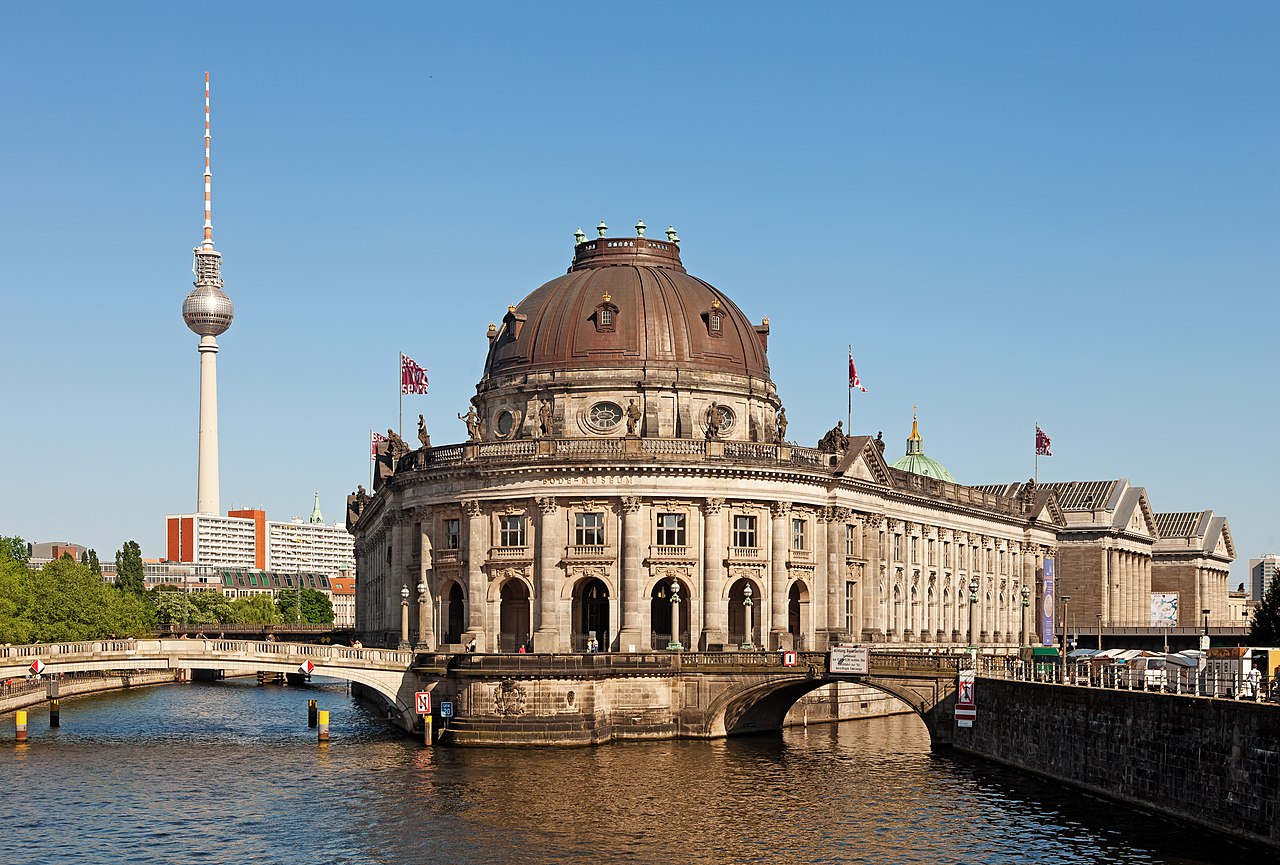
/bɜːrˈlɪn/ • Discover the city
A historical powerhouse known for its art, nightlife, and resilient spirit.
Population
3.8 Million
City Proper
Land Area
891.8
Square Kilometers
GDP Nominal
$190 Billion
Regional Nominal
Global Rank
No. 16
Global Innovation
Real-time local weather, live currency rates, and airport transit router.
Perfect time to explore the city! Enjoy walking around Berlin and discover its local parks, architectural marvels, and scenic avenues.
~20-40 minutes • Around 23 - 37 EUR
Book via official ridesharing mobile applications where available to ensure fair rates!
~30-50 minutes • Around 3 - 7 EUR • Runs frequently
Direct route connects airport terminal to major central stations.
Berlin is a city that defies simple classification, blending deep history with avant-garde modernism.
190+ Nations
A diverse international hub where different cultures converge seamlessly.
40% Green
Extensive parks, forests, and lakes define the city's unique urban landscape.
800+ Years
From Prussian roots to the Wall, history is visible on every corner.
EU Startup Capital
A thriving ecosystem for tech, innovation, and digital creativity.
Berlin's history is a turbulent journey through empire, war, division, and rebirth.
Berlin is established as a trading post at the crossing of two rivers, Cölln and Berlin.
Berlin becomes the capital of the Kingdom of Prussia, flourishing under Frederick the Great.
The city becomes the center of the Third Reich, facing destruction during World War II.
The construction of the Berlin Wall divides the city, separating East and West for 28 years.
The fall of the Wall sparks German unity, restoring Berlin as the capital of a free nation.
Empirical charts mapping local seasonal variations, long-term urban population growth, and economic sector distribution.
Average temperatures (°C) against average monthly rainfall metrics (mm).
Source: Local meteorology department climatology records.
Historical urban concentration of the metropolitan area.
Source: Official national statistics historical database.
Percentage output breakdown of Berlin's massive $190 Billion economy.
Source: City Treasury economic forecast index.
Each Kiez offers a distinct atmosphere, ranging from luxury boutiques to alternative art scenes.
Loading district dossier...
Navigate Berlin's iconic monuments, royal historical locations, and prestigious world-class museums directly on our live interactive GIS mapping application.
Hover or tap on any of the map markers to read comprehensive descriptions, travel tips, and transport guidelines.
Iconic neoclassical monument.
Parliament building with a glass dome.
From imperial architecture to modern history, these sites are essential.
A monumental symbol of European unity and peace.
The historic home of the German Parliament.
Offers panoramic views over the entire city.
A collection of five world-class museums.
The longest remaining section of the Berlin Wall.
A magnificent Baroque palace built for royalty.
Berlin’s food scene is a mix of traditional comfort and international fusion.
Steamed, fried pork sausage served with curry-ketchup.
A Turkish-German culinary staple invented in Berlin.
Iconic knot-shaped bread, usually salted.
A tart, fruity wheat beer often served with syrup.
Loading live transit database feed...
Plan your expenditures based on your preferred travel standard, and run live bidirectional currency conversions.
Change value in any currency field below to update all other fields synchronously based on realistic exchange coefficients.
Berlin vs Global Cities
| City | Index Score | Cost | ||
|---|---|---|---|---|
| New York | 1.6 | Expensive | ||
| London | 1.4 | Expensive | ||
| Berlin | 1.0 | Affordable | ||
| Paris | 1.3 | Expensive | ||
| Tokyo | 1.1 | Moderate |
Spread the knowledge! Share this masterclass encyclopedia of Berlin with friends or colleagues.
Have questions about visiting, moving, or living in Berlin? Ask local experts and fellow travelers.
View All Discussions →I heard Germany loves cash. Do small bakeries, currywurst stands, and bars in Kreuzberg take contactless cards now?
Card acceptance improved a lot, but always carry €20-€50 in cash! Many Spätis (corner shops), traditional bakeries, and techno clubs still strictly require cash for small orders.
I'm moving to Berlin from Canada this October on a Freelance Visa and am starting my housing search. Every listing seems to either lack Anmeldung or cost over 1,800 EUR per month in central areas like Kreuzberg or Neukölln. What are some realistic neighborhoods or strategies for finding a mid-range, temporary flat that allows address registration?
To be completely honest, it is currently extremely challenging. The Berlin housing market is experiencing heavy competition, and finding an apartment—or even a room in a shared flat (WG)—that officially permits 'Anmeldung' requires patience, speed, and preparation. Here are a few tips to help you succeed: 1. **Prepare your documents in advance (Bewerbungsmappe):** Have a single PDF ready containing your SCHUFA report (credit check), last 3 months of payslips (or proof of funds/employment contract), copy of ID/passport, and a Mietschuldenfreiheitsbescheinigung (landlord confirmation of no rent arrears). 2. **Use Premium Subscriptions:** A lot of landlords on ImmoScout24 only accept messages from premium members for the first 24–48 hours. 3. **Look Outside the Ring:** Expanding your search to districts like Lichtenberg, Pankow, Neukölln (further south), or Spandau significantly increases your chances. 4. **Beware of Scams:** Never transfer money (deposit or first month's rent) before viewing the apartment in person and signing a valid lease contract. If someone claims they are currently out of the country and will mail you the key, it is 100% a scam.
Welcome to the Berlin housing scramble! Honest answer: it’s really tough right now, especially if you're restricting yourself to Kreuzberg or Neukölln. Finding a central 1-bedroom with Anmeldung for under €1,500 on standard sites is like finding a needle in a haystack. Unregistered sublets (without Anmeldung) are everywhere, but you definitely need that address paper for your Freelance Visa appointment. For a smooth transition in October, your best bet is using expat-focused temporary housing platforms like Wunderflats, HC24, or Spotahome. They explicitly filter for places that provide the *Wohnungsgeberbestätigung* (landlord confirmation) required for Anmeldung. Expect to pay around €1,100–€1,400 per month for a furnished studio or 1-bedroom. It's a premium, but treating it as a 3- to 6-month launchpad while you look for a permanent place locally is worth the peace of mind. As for neighborhoods, I strongly recommend expanding your search to Wedding, Moabit, Lichtenberg, or Tempelhof. They are significantly more affordable, very well-connected by U-Bahn/S-Bahn, and have great local food scenes without the extreme price gouging of Neukölln.
Welcome to the Berlin housing maze! Honestly, trying to land a cheap, permanent flat with Anmeldung directly from Canada is nearly impossible right now. My best advice is to lower your expectations for month one and book a temporary, furnished place through platforms like Wunderflats or Spotahome. They are pricier (around €1,200–€1,500/month for a studio/1BR), but almost all of them legally provide the Wohnungsgeberbestätigung you need for your tax ID and visa. In terms of neighborhoods, Kreuzberg and Neukölln are brutal right now. I'd recommend looking at Wedding, Moabit, Lichtenberg, or Tempelhof. They are much more realistic for mid-range budgets, offer great connectivity, and still have fantastic local dining and culture without the insane hype tax. Once you're on the ground with your initial Anmeldung sorted, set up alerts on WG-Gesucht and ImmoScout24 (get the Mieterplus subscription, it's almost mandatory these days). It takes time, but being here in person to attend viewings makes a world of difference!
Welcome to the Berlin housing maze! Honest truth: if you're restricting your search to central Kreuzberg or Neukölln, €1,800/month for a temporary furnished place with Anmeldung is unfortunately the current reality on platforms like Wunderflats or HousingAnywhere. For your first 3 to 6 months, I strongly recommend expanding your search radius to make things easier on your budget. Check out neighborhoods like Wedding, Moabit, Lichtenberg, or Pankow. They are extremely well-connected by the U-Bahn and S-Bahn, much safer bets for finding a 1-bedroom in the €1,100–€1,400 warm range, and still have great local vibe and cafes. If you're open to flatshares (WGs), look on WG-Gesucht—temporary sublets with official registration usually run between €600 and €900/month. My advice for the Freelance Visa: prioritize getting any legitimate furnished temporary place that guarantees the 'Wohnungsgeberbestätigung' (landlord confirmation form) for your first 3–6 months, even if it's slightly outside the Ringbahn. Having that official address locked down makes getting your tax ID and bank account sorted infinitely easier while you look for a permanent home.
I just accepted a job offer in Berlin and will be relocating from Canada in two months. Everyone keeps warning me about the housing crisis and how difficult it is to get an apartment that provides an Anmeldung for address registration. For those who moved recently, how long did it realistically take you to secure a permanent place?
Short answer: Yes, it really is that difficult right now. Berlin is experiencing a severe housing shortage, and finding a long-term apartment (Unbefristet) that includes an official registration (Anmeldung) often takes 3 to 6 months of intense searching. Because of high demand and rent control regulations, a single public listing can receive hundreds of messages within minutes. Landlords can afford to be extremely selective. To give yourself the best chance: 1. Prepare your complete 'Bewerbungsmappe' in advance (Schufa credit score, last 3 payslips, Mietschuldenfreiheitsbescheinigung from your previous landlord, and ID copy). 2. Get a paid subscription on platforms like ImmoScout24 (Premium) to apply the moment places are listed. 3. Be open to outer districts (like Lichtenberg, Pankow, or Spandau). 4. Consider starting with a temporary furnished apartment or sublet (Zwischenmiete) that allows Anmeldung so you have a base while you hunt full-time. It is tough and can be disheartening, but treat it like a full-time job and you will eventually find something!
Welcome! As a fellow Canadian who moved here two years ago, I won't sugarcoat it: yes, it really is as tough as people say, but it is definitely not impossible if you strategy correctly. Realistically, expect it to take 2 to 4 months of intensive searching once you're actually on the ground here. My top advice is to book temporary furnished housing (via platforms like Wunderflats or Habyt) for your first 2 to 3 months that *explicitly* offers the 'Wohnungsgeberbestätigung' (the landlord document required for registration). You'll pay a premium—around €1,200 to €1,600/month for a studio or 1-bed—but it gives you a legal address, gets you your tax ID, and buys you time so you aren't searching under extreme pressure. Once you're here with your first German payslip, get an ImmoScout24 MieterPlus subscription (it's practically mandatory now) and apply broadly. Look slightly outside the Ringbahn in areas like Wedding, Lichtenberg, or Pankow, where you get much better value for long-term places around €800-€1,100 warm. Good luck with the move!
Expand your travel itinerary and economic comparison benchmarks by diving into our detailed GIS guides for neighboring hubs.