/Woo-hahn/ • Wuhan: Where Rivers Meet, Cultures Converge, and Innovation Thrives.
Wuhan, the capital of Hubei province, is a significant economic, educational, and cultural center. Located at the intersection of the Yangtze and Han rivers, it's known as the 'River City' and plays a pivotal role in China's development.
Population
457k
Estimated City Proper Population (specific urban core data)
Land Area
8,569 km²
Total Administrative Area
GDP Nominal
US$59 Billion
Estimated Nominal GDP (older specific data)
Global Rank
No. 65
Global City Ranking (based on specific criteria)
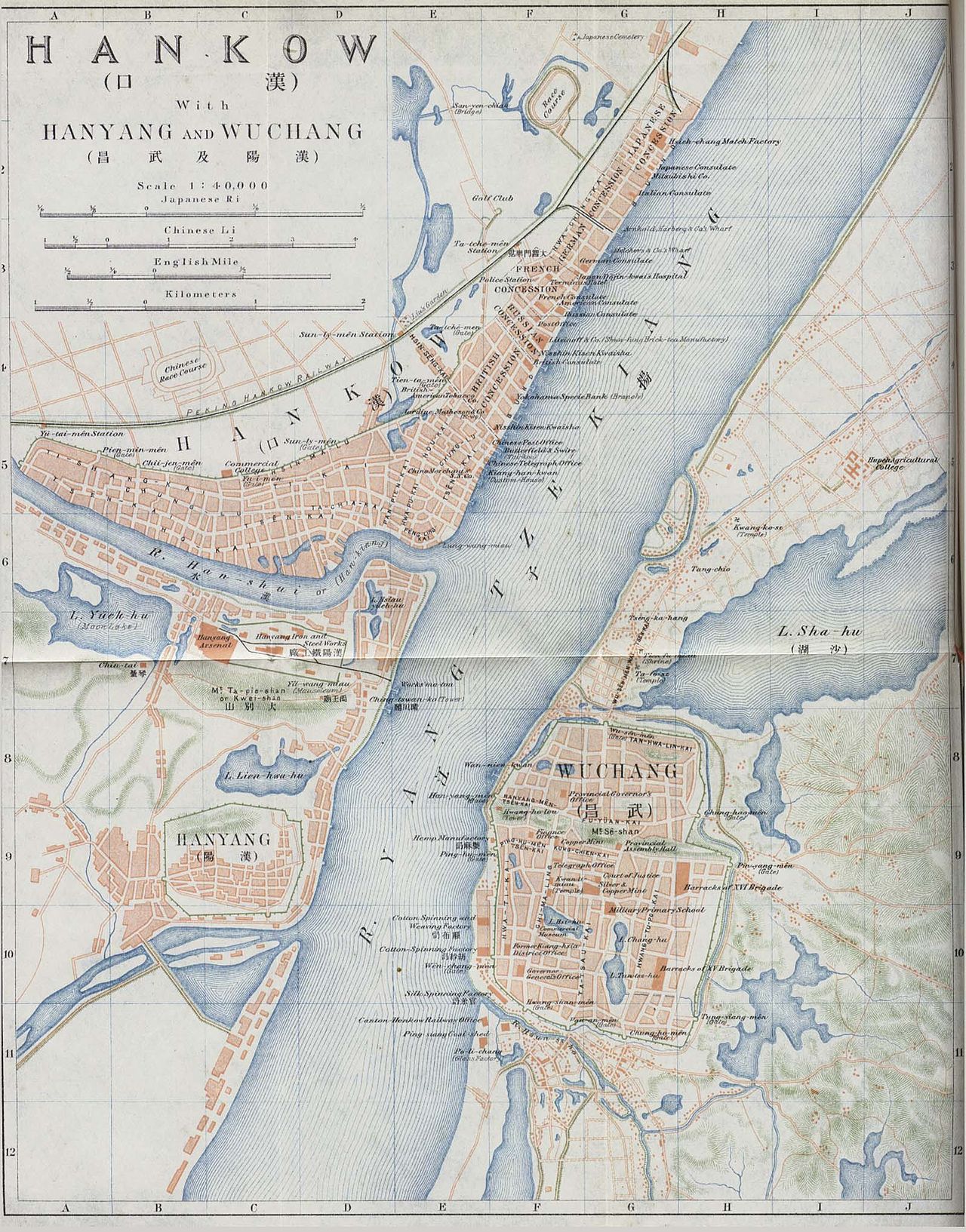
Wuhan, a city formed by the merger of three towns—Wuchang, Hankou, and Hanyang—is strategically located where the Yangtze and Han rivers meet. It boasts a rich history, a vibrant modern economy, and a pivotal role in China's transportation and education networks. Visitors can explore ancient temples, bustling markets, and serene lakes.
Major Hub
Wuhan is a crucial transportation and logistics hub, connecting central China to the world via air, rail, and water.
Lakes & Parks
Known for its numerous lakes and green spaces, Wuhan is committed to urban greening and ecological preservation, offering a balance of nature and urban life.
1 Million+ Students
Home to over a million university students, Wuhan is a leading center for higher education and scientific research in China.
High Tech Focus
Wuhan's economy is booming, driven by industries like optics, electronics, automobiles, and biopharmaceuticals.
Wuhan's history is a tapestry woven with ancient cultures, revolutionary movements, and rapid industrialization, marking its transformation into a vital modern city.
Wuchang, one of Wuhan's constituent towns, was the capital of the Kingdom of Wu, playing a significant strategic role.
Hankou became a treaty port, opening to foreign trade and investment, which accelerated its economic development and cultural exchange.
The Wuchang Uprising, a pivotal event, marked the beginning of the Xinhai Revolution that led to the collapse of the Qing Dynasty.
Wuhan briefly served as the capital of the Kuomintang left-wing government during the Northern Expedition, highlighting its political importance.
Post-reform and opening up, Wuhan experienced rapid industrialization and urbanization, becoming a key economic engine in Central China.
Empirical charts mapping local seasonal variations, long-term urban population growth, and economic sector distribution.
Average temperatures (°C) against average monthly rainfall metrics (mm).
Source: Local meteorology department climatology records.
Historical urban concentration of the metropolitan area.
Source: Official national statistics historical database.
Percentage output breakdown of Wuhan's massive US$59 Billion economy.
Source: City Treasury economic forecast index.
Explore diverse municipal areas.
Loading district dossier...
Navigate Wuhan's iconic monuments, royal historical locations, and prestigious world-class museums directly on our live interactive GIS mapping application.
Hover or tap on any of the map markers to read comprehensive descriptions, travel tips, and transport guidelines.
Iconic places to visit.
Explore the local sights.
Gastronomy details.
Loading live transit database feed...
Plan your expenditures based on your preferred travel standard, and run live bidirectional currency conversions.
Change value in any currency field below to update all other fields synchronously based on realistic exchange coefficients.
Cost breakdown
| City | Hotel | Meals | Transit | Coffee |
|---|
Spread the knowledge! Share this masterclass encyclopedia of Wuhan with friends or colleagues.
Have questions about visiting, moving, or living in Wuhan? Ask local experts and fellow travelers.
View All Discussions →No active discussions for WUHAN yet.
Be the first to ask a question or leave a tip for fellow travelers!