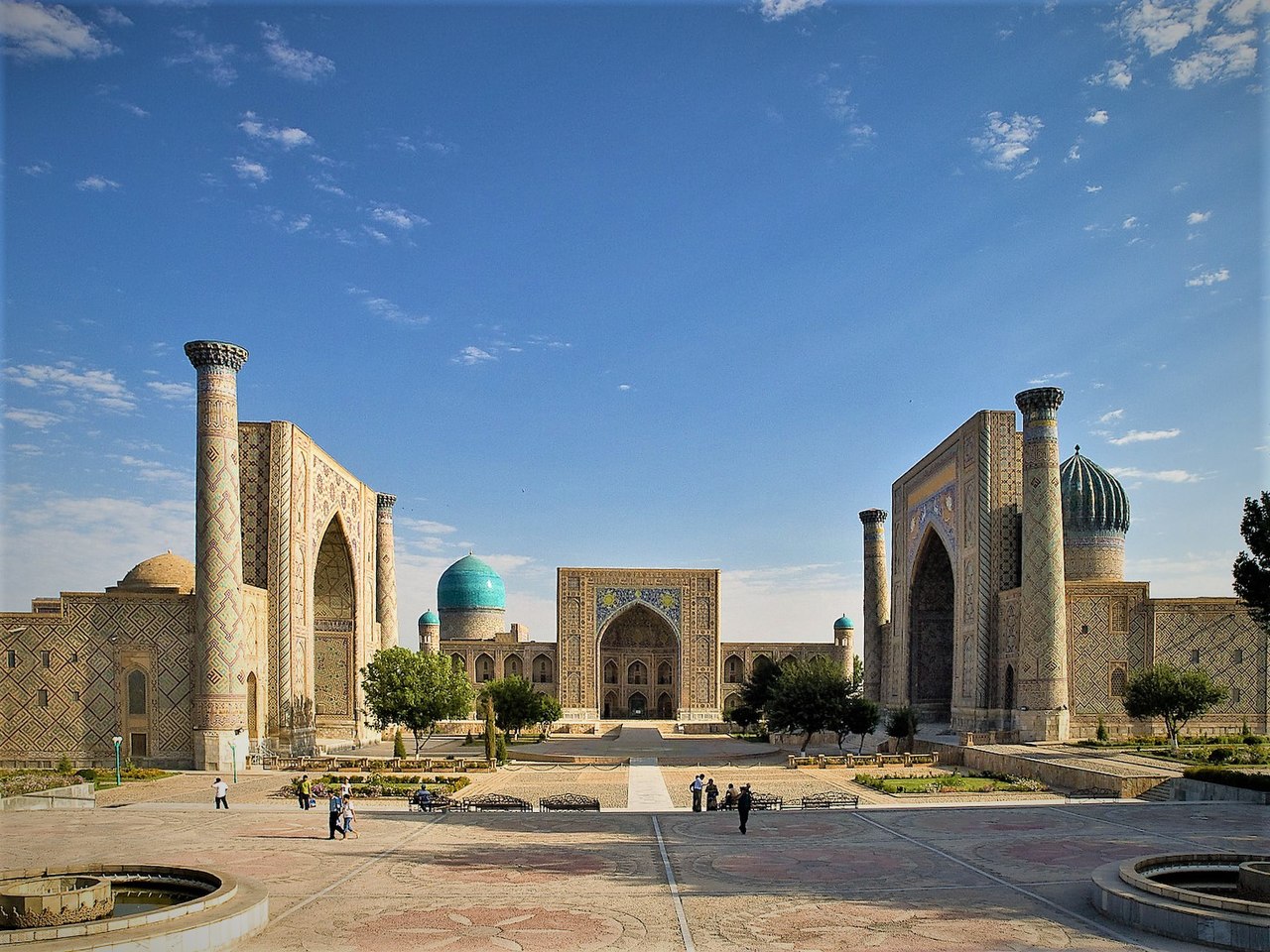
/ˈsæmərkænd/ • The Crossroads of Cultures and Ancient Heart of the Silk Road
Experience the legendary architecture and timeless spirit of one of the world's oldest inhabited cities.
Population
550K
Urban Residents
Land Area
120
Square Kilometers
GDP Nominal
$4.1B
Nominal GDP
Global Rank
612
Global Economic Rank
Real-time local weather, live currency rates, and airport transit router.
Perfect time to explore the city! Enjoy walking around Samarkand and discover its local parks, architectural marvels, and scenic avenues.
~20-40 minutes • Around 0 - 0 UZS
Book via official ridesharing mobile applications where available to ensure fair rates!
~30-50 minutes • Around 0 - 0 UZS • Runs frequently
Direct route connects airport terminal to major central stations.
Samarkand serves as a bridge between civilizations, famous for its blue-tiled domes and deep scientific heritage.
2700 Years
Historically positioned as the central nexus for trade between China, India, and Europe.
Multi-ethnic
A vibrant blend of Uzbek, Tajik, Russian, and Persian cultural influences.
Abundant
The city features expansive shaded avenues and lush public parks like Alisher Navoi Park.
Growing
A strong pivot toward international tourism, agro-processing, and textile manufacturing.
Samarkand's timeline reflects the rise and fall of empires that shaped the Asian continent.
The city was established as Maracanda, the capital of Sogdiana, thriving through irrigation and trade.
Genghis Khan destroyed the city, leading to a period of decline until the eventual rise of the Timurids.
Amir Timur declared Samarkand the capital, commissioning the architectural masterpieces seen today.
The city came under the Russian Empire, leading to the development of the 'European' side of town.
Samarkand emerged as a premier cultural capital of the newly independent Republic of Uzbekistan.
Empirical charts mapping local seasonal variations, long-term urban population growth, and economic sector distribution.
Average temperatures (°C) against average monthly rainfall metrics (mm).
Source: Local meteorology department climatology records.
Historical urban concentration of the metropolitan area.
Source: Official national statistics historical database.
Percentage output breakdown of Samarkand's massive $4.1B economy.
Source: City Treasury economic forecast index.
From the ancient core to the modern expansion, every area offers a different perspective.
Loading district dossier...
Navigate Samarkand's iconic monuments, royal historical locations, and prestigious world-class museums directly on our live interactive GIS mapping application.
Hover or tap on any of the map markers to read comprehensive descriptions, travel tips, and transport guidelines.
The city's iconic square.
Mausoleum of Timur.
Explore these world-renowned sites that define the Silk Road experience.
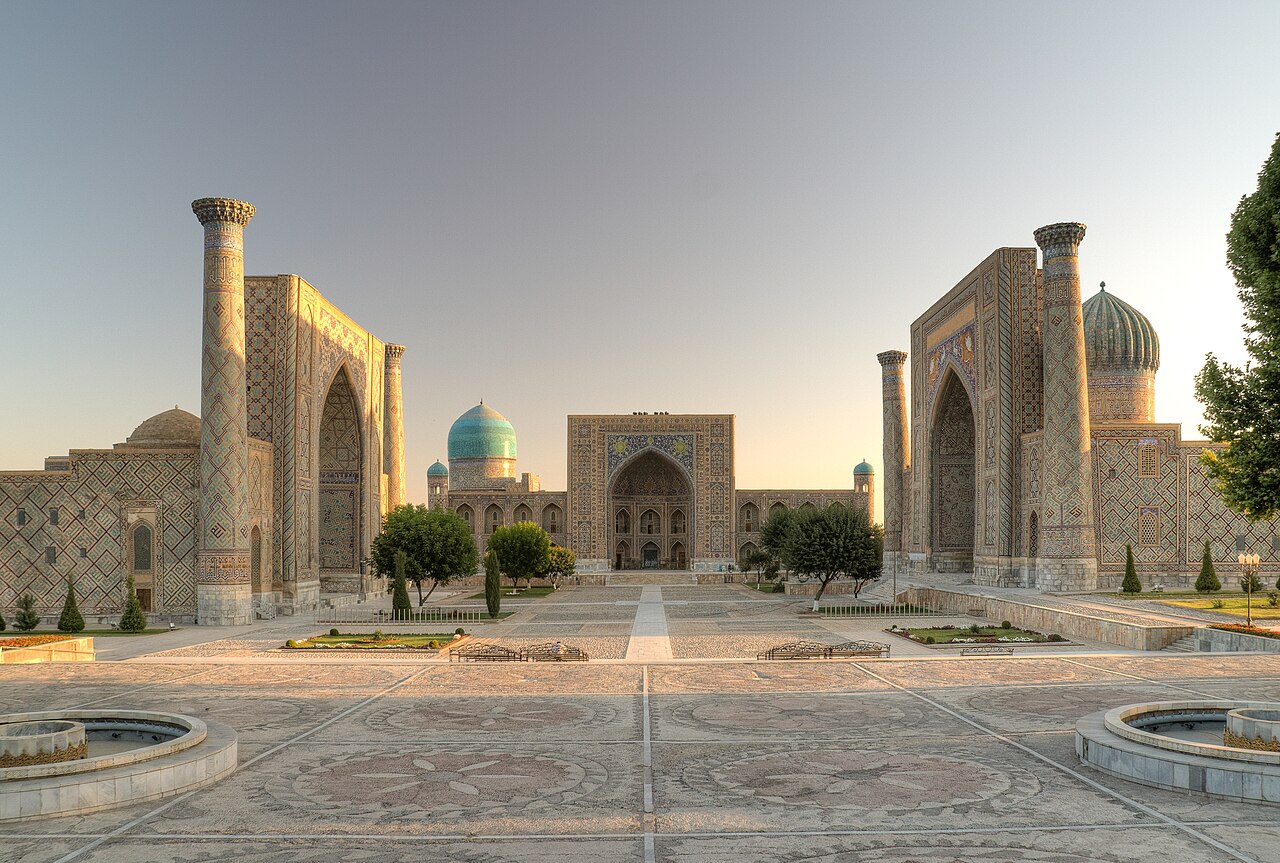
A stunning ensemble of three madrasahs featuring intricate blue tilework.
The resting place of Amir Timur, showcasing beautiful golden interiors.
A vibrant avenue of tombs covered in brilliant majolica tiles.
Once one of the largest mosques in the Islamic world.
A 15th-century facility where scholars mapped the stars.
The primary hub for local spices, breads, and produce.
Experience rich, savory flavors influenced by centuries of caravan trade.
A unique variation of the national rice dish, using specific local ingredients.
The most famous bread in Uzbekistan, traditionally baked in tandoor ovens.
Perfectly seasoned grilled meat skewers served over flatbread.
The standard hospitality drink served in bowls at every social gathering.
Loading live transit database feed...
Plan your expenditures based on your preferred travel standard, and run live bidirectional currency conversions.
Change value in any currency field below to update all other fields synchronously based on realistic exchange coefficients.
How Samarkand stacks up against major world capitals.
| City | Cost of Living | Tourism Potential | ||
|---|---|---|---|---|
| New York | Very High | High | ||
| London | High | High | ||
| Paris | High | Very High | ||
| Tokyo | Medium | High | ||
| Samarkand | Low | Very High |
Spread the knowledge! Share this masterclass encyclopedia of Samarkand with friends or colleagues.
Have questions about visiting, moving, or living in Samarkand? Ask local experts and fellow travelers.
View All Discussions →No active discussions for SAMARKAND yet.
Be the first to ask a question or leave a tip for fellow travelers!
Expand your travel itinerary and economic comparison benchmarks by diving into our detailed GIS guides for neighboring hubs.