Overview History Analytics Neighborhoods Interactive Map Landmarks Discussion Board Budget Planner
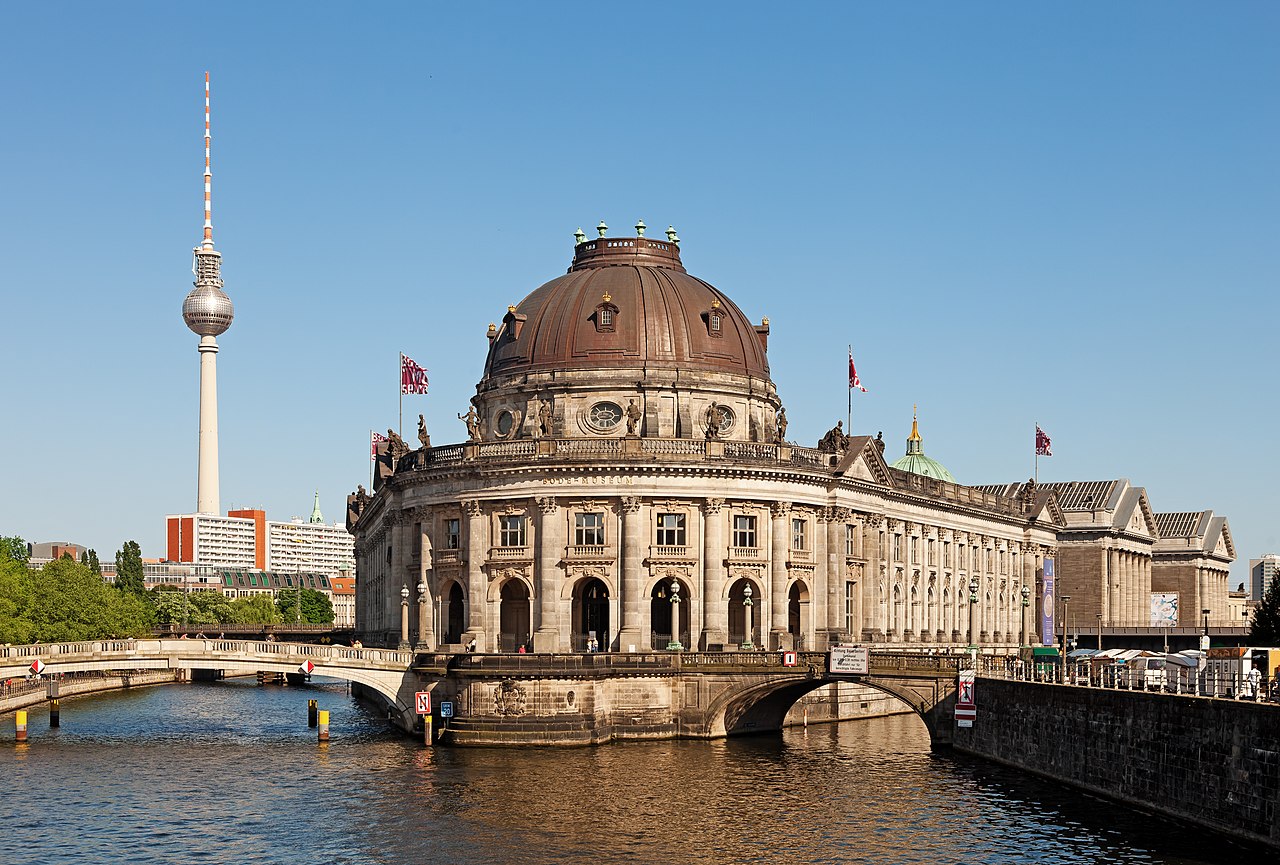
Panoramic view of Berlin
Metropolitan Guide

Berlin

/bɜːrˈlɪn/ • Discover the city

A historical powerhouse known for its art, nightlife, and resilient spirit.

Population

3.8 Million

City Proper

Land Area

891.8

Square Kilometers

GDP Nominal

$190 Billion

Regional Nominal

Global Rank

No. 16

Global Innovation

Tourist Utility Dashboard

Smart Berlin Tourist Dashboard

Real-time local weather, live currency rates, and airport transit router.

🌦️ Live Weather in Berlin

Live
🌤️
24°C
Mild & Pleasant

Perfect time to explore the city! Enjoy walking around Berlin and discover its local parks, architectural marvels, and scenic avenues.

💵 Currency Exchange & Converter

1 USD ≈ 0.93 EUR
⬇️ Equivalent in Local Currency (EUR) ⬇️
92.59 EUR

✈️ Airport BER Route

To Center Route
🚕

Taxi Service Recommended

~20-40 minutes • Around 23 - 37 EUR

Book via official ridesharing mobile applications where available to ensure fair rates!

🚌

Airport Express Bus / Train

~30-50 minutes • Around 3 - 7 EUR • Runs frequently

Direct route connects airport terminal to major central stations.

The pulsing heart of Central Europe.

Berlin at a Glance

Berlin is a city that defies simple classification, blending deep history with avant-garde modernism.

Multicultural

190+ Nations

A diverse international hub where different cultures converge seamlessly.

Green Spaces

40% Green

Extensive parks, forests, and lakes define the city's unique urban landscape.

Historical Impact

800+ Years

From Prussian roots to the Wall, history is visible on every corner.

Tech Hub

EU Startup Capital

A thriving ecosystem for tech, innovation, and digital creativity.

From Prussian fortress to reunited capital.

Historical Epochs

Berlin's history is a turbulent journey through empire, war, division, and rebirth.

1237

Founding

Berlin is established as a trading post at the crossing of two rivers, Cölln and Berlin.

1701

Prussian Capital

Berlin becomes the capital of the Kingdom of Prussia, flourishing under Frederick the Great.

1933

Darkest Chapter

The city becomes the center of the Third Reich, facing destruction during World War II.

1961

The Wall

The construction of the Berlin Wall divides the city, separating East and West for 28 years.

1989

Reunification

The fall of the Wall sparks German unity, restoring Berlin as the capital of a free nation.

Data-Driven Intelligence

Meteorology, Population & GDP Sectors

Empirical charts mapping local seasonal variations, long-term urban population growth, and economic sector distribution.

Seasonal Meteorological Patterns

Average temperatures (°C) against average monthly rainfall metrics (mm).

Source: Local meteorology department climatology records.

Centuries of Population Expansion

Historical urban concentration of the metropolitan area.

Source: Official national statistics historical database.

Gross Metropolitan Product (GMP) Sectors

Percentage output breakdown of Berlin's massive $190 Billion economy.

Source: City Treasury economic forecast index.

Discover the unique character of Berlin's districts.

Neighborhood Explorer

Each Kiez offers a distinct atmosphere, ranging from luxury boutiques to alternative art scenes.

Loading...

Primary District

Loading district dossier...

The District Vibe -
Best For -
Top Landmark -

District Scores

Historical & Stately Heritage Metric Rated
Nightlife & Dining Intensity Metric Rated
Shopping & Boutiques Variety Metric Rated
GIS Live Coordinates

Interactive City Navigator

Navigate Berlin's iconic monuments, royal historical locations, and prestigious world-class museums directly on our live interactive GIS mapping application.

Hover or tap on any of the map markers to read comprehensive descriptions, travel tips, and transport guidelines.

1

Brandenburg Gate

Iconic neoclassical monument.

2

Reichstag

Parliament building with a glass dome.

🗺️ GPS: 52.52° N, 13.405° W Active Live GPS Tracker
Discover the icons of the German capital.

Must-See Landmarks

From imperial architecture to modern history, these sites are essential.

Brandenburg Gate
Iconic ★ 4.8 (12K+ reviews)

Brandenburg Gate

A monumental symbol of European unity and peace.

🎟️ Ticket Price: Free ⏳ Recommended: Visit at night for best illumination. 🚇 Transit: U5 Brandenburger Tor
Reichstag
History ★ 4.7 (8K+ reviews)

Reichstag

The historic home of the German Parliament.

🎟️ Ticket: Free (Requires booking) 🚇 Transit: U5 Bundestag
TV Tower
View ★ 4.6 (15K+ reviews)

TV Tower

Offers panoramic views over the entire city.

🎟️ Ticket: €20+ 🚇 Transit: U2/U5/U8 Alexanderplatz
Museum Island
Art ★ 4.9 (10K+ reviews)

Museum Island

A collection of five world-class museums.

🎟️ Ticket: €19 (Day pass) 🚇 Transit: U5 Museumsinsel
East Side Gallery
Cold War ★ 4.7 (20K+ reviews)

East Side Gallery

The longest remaining section of the Berlin Wall.

🎟️ Ticket: Free 🚇 Transit: U1 Schlesisches Tor
Charlottenburg Palace
Culture ★ 4.5 (5K+ reviews)

Charlottenburg Palace

A magnificent Baroque palace built for royalty.

🎟️ Ticket: €12 🚇 Transit: U7 Richard-Wagner-Platz
Living like a Berliner.

Culture & Transport

Berlin’s food scene is a mix of traditional comfort and international fusion.

🌭 Currywurst

Steamed, fried pork sausage served with curry-ketchup.

🥙 Döner Kebab

A Turkish-German culinary staple invented in Berlin.

🥨 Pretzel

Iconic knot-shaped bread, usually salted.

🍺 Berliner Weisse

A tart, fruity wheat beer often served with syrup.

Live Transit Status Board

Loading live transit database feed...

Travel Finance & Cost of Living

Interactive Budget Planner & Live Converter

Plan your expenditures based on your preferred travel standard, and run live bidirectional currency conversions.

💳 Travel Budget Planner

EUR (€) Estimation
5 Days
🏨 Accommodation Budget 0
🍛 Food, Pubs & Drinks 0
🎟️ Paid Monuments & Attractions 0
🚇 Public Transport Services 0
Total Estimated Expenditure Calculated on typical local parameters
0

💱 Live Bidirectional Converter

Live Conversions

Change value in any currency field below to update all other fields synchronously based on realistic exchange coefficients.

GBP (£)
USD ($)
EUR (€)
RUB (₽)
CNY (¥)
Prices are based on average daily costs.

Comparison Index

Berlin vs Global Cities

City Index Score Cost
New York 1.6 Expensive
London 1.4 Expensive
Berlin 1.0 Affordable
Paris 1.3 Expensive
Tokyo 1.1 Moderate

Share this interactive guide

Spread the knowledge! Share this masterclass encyclopedia of Berlin with friends or colleagues.

Links support popups and auto-open native email composer clients safely.
Local Community Board

Berlin Travel Forum

Have questions about visiting, moving, or living in Berlin? Ask local experts and fellow travelers.

View All Discussions →

Start a Discussion

Challenge

I heard Germany loves cash. Do small bakeries, currywurst stands, and bars in Kreuzberg take contactless cards now?

| 💬 5 Replies
Avatar
KreuzbergKiez Jul 21, 2026 13:00

Card acceptance improved a lot, but always carry €20-€50 in cash! Many Spätis (corner shops), traditional bakeries, and techno clubs still strictly require cash for small orders.

Avatar
Liam_In_Neukoelln Oct 15, 2026 23:01

Things have definitely improved since the pandemic, but Berlin hasn't completely abandoned cash yet! Most supermarkets, sit-down restaurants, and bigger spots like Curry 36 will happily take contactless cards or Apple Pay without a hitch. However, in Kreuzberg and Neukölln, you'll still run into plenty of small bakeries, Spätis (corner shops), and dive bars that are strictly cash-only, or require a minimum spend of €5 or €10 to use a card. Trying to buy a €2.50 espresso or a cheap Döner with a card is still a gamble at smaller neighborhood shops. My rule of thumb after living here for three years: keep around €20 to €40 in cash in your wallet just in case, but expect to use your card for about 80% of your daily expenses. You'll be totally fine as long as you have that safety net!

Avatar
Mark_Neukoelln Nov 5, 2026 05:14

Things have definitely improved since the pandemic, but the short answer is: you still need cash in Berlin! While most restaurants and larger shops accept contactless Visa or Mastercard now, small bakeries and Spätis often have a €5 minimum for card payments, or they'll be completely cash-only if you're just grabbing a €1.80 Brötchen. Kreuzberg is actually a prime example of where cash is still heavily used, especially for nightlife. A lot of the traditional dive bars, Kneipen, and smaller cafes around Schlesisches Tor strictly take cash at the bar. Even popular Currywurst stands might suddenly have a 'Nur Bares' (cash only) sign taped to the register. My rule of thumb living here: keep at least €30–€50 cash on you just in case. Also watch out for places that say they take card, but actually mean 'Girocard only' (the local German system), which often rejects international credit cards!

Avatar
Kat_BerlinExpat Nov 10, 2026 06:53

It’s definitely gotten a lot better over the last few years, but you still need to keep cash on you! Supermarkets, retail shops, and most sit-down restaurants take contactless and Apple Pay without issue now. However, small local spots—especially in Kreuzberg and Neukölln—can still be surprisingly stubborn about cards. A lot of Spätis (corner shops), small bakeries, dive bars, and street food kiosks still have a strict 'Nur Barzahlung' (cash only) policy, or they'll set a €10 minimum for card payments. If you're just grabbing a €1.50 pretzel or a €4 Currywurst, don't assume you can tap your card. My rule of thumb after living here for 5 years is to always carry €20–€30 in cash just in case. You'll be able to use card for 80% of your stay, but that remaining 20% will definitely catch you out if you go completely cashless!

Avatar
Marcus_in_Neukoelln Nov 14, 2026 09:36

Things have definitely improved since the pandemic, but Berlin is still surprisingly cash-heavy compared to cities like London or Amsterdam. Most restaurants and larger shops accept Visa/Mastercard now, but small bakeries, Spätis (late-night shops), and traditional food stalls often have a €5 or €10 minimum for card payments—if they take cards at all. In Kreuzberg, it's a mix: trendy third-wave coffee shops and newer bars are often strictly cashless, while traditional Kneipen (local pubs) and classic Currywurst spots like Curry 36 still lean heavily on cash. You'll also need coins for public restrooms (usually 50c to €1) and coat checks at clubs. My rule of thumb: always keep around €20 to €30 cash in your wallet just in case. You can rely on contactless payments about 80% of the time, but that remaining 20% will definitely catch you out when you just want a €1.50 pretzel!

Verify:

I just accepted a job offer in Berlin and will be relocating from Canada in two months. Everyone keeps warning me about the housing crisis and how difficult it is to get an apartment that provides an Anmeldung for address registration. For those who moved recently, how long did it realistically take you to secure a permanent place?

| 💬 9 Replies
Avatar
BerlinLocal_Max Aug 4, 2026 12:34

Short answer: Yes, it really is that difficult right now. Berlin is experiencing a severe housing shortage, and finding a long-term apartment (Unbefristet) that includes an official registration (Anmeldung) often takes 3 to 6 months of intense searching. Because of high demand and rent control regulations, a single public listing can receive hundreds of messages within minutes. Landlords can afford to be extremely selective. To give yourself the best chance: 1. Prepare your complete 'Bewerbungsmappe' in advance (Schufa credit score, last 3 payslips, Mietschuldenfreiheitsbescheinigung from your previous landlord, and ID copy). 2. Get a paid subscription on platforms like ImmoScout24 (Premium) to apply the moment places are listed. 3. Be open to outer districts (like Lichtenberg, Pankow, or Spandau). 4. Consider starting with a temporary furnished apartment or sublet (Zwischenmiete) that allows Anmeldung so you have a base while you hunt full-time. It is tough and can be disheartening, but treat it like a full-time job and you will eventually find something!

Avatar
Marc_CDN_In_Berlin Aug 11, 2026 07:27

Welcome! As a fellow Canadian who moved here two years ago, I won't sugarcoat it: yes, it really is as tough as people say, but it is definitely not impossible if you strategy correctly. Realistically, expect it to take 2 to 4 months of intensive searching once you're actually on the ground here. My top advice is to book temporary furnished housing (via platforms like Wunderflats or Habyt) for your first 2 to 3 months that *explicitly* offers the 'Wohnungsgeberbestätigung' (the landlord document required for registration). You'll pay a premium—around €1,200 to €1,600/month for a studio or 1-bed—but it gives you a legal address, gets you your tax ID, and buys you time so you aren't searching under extreme pressure. Once you're here with your first German payslip, get an ImmoScout24 MieterPlus subscription (it's practically mandatory now) and apply broadly. Look slightly outside the Ringbahn in areas like Wedding, Lichtenberg, or Pankow, where you get much better value for long-term places around €800-€1,100 warm. Good luck with the move!

Avatar
Dave_M Sep 19, 2026 17:19

Welcome! To be completely honest, the rumors aren't exaggerated—it really is that competitive right now. It took me about three and a half months to land my permanent place after moving here. My biggest advice is not to try finding a permanent long-term spot directly from Canada. Instead, book 2–3 months in a temporary furnished apartment (via platforms like Wunderflats, Habyt, or Spotahome) that explicitly offers an *Anmeldung*. That gives you a legal address immediately while you hunt locally. When you start searching for permanent flats, get ImmoScout24 Premium right away—listings get hundreds of applicants within minutes, and the subscription puts you at the top of the pile. Expect to pay around €1,200 to €1,600 'warm' (inclusive of heating/utilities) for a 1-bedroom apartment inside the Ringbahn. Make sure you have your document portfolio ready on day one: signed job contract, SCHUFA credit check, and ID copies. Don't restrict yourself only to trendy hubs like Kreuzberg, Mitte, or Friedrichshain. Widening your search to neighborhoods like Wedding, Lichtenberg, Pankow, or Tempelhof will dramatically increase your response rate. Good luck with the move!

Avatar
Dave_Mtl Sep 20, 2026 03:25

Congrats on the job offer! To be completely honest, yes, the housing market is as tough as people say, but it's far from impossible if you adjust your strategy. It took me about 3 months to land a permanent place when I moved here. My biggest piece of advice is not to stress about finding a long-term lease directly from Canada. Instead, book a furnished temporary apartment for your first 2–3 months through platforms like Wunderflats or Spotahome—just double-check that they explicitly provide the Wohnungsgeberbestätigung (landlord confirmation) so you can get your initial Anmeldung. Once you're on the ground, treat apartment hunting like a second job. Definitely get ImmoScout24 Premium so your messages actually get seen, and have a complete application PDF ready to send within seconds of a listing going live (job contract, payslips/savings, SCHUFA, ID). Realistically, budget around €900–€1,300 'Warmmiete' for a 1-bedroom. If you look outside the Ringbahn—places like Lichtenberg, Tempelhof, or Pankow—you'll have way less competition than in Neukölln or Kreuzberg. Good luck with the move!

Avatar
Liam_YYZ_to_BER Sep 25, 2026 03:11

Congrats on the job offer! Coming from Toronto myself a year ago, I can tell you the rumors are true, but it’s not completely impossible if you play it smart. Realistically, plan for 2 to 4 months of searching once you're on the ground. Almost nobody lands a permanent, unfurnished place directly from overseas unless your company provides relocation assistance. Your best strategy is to book a temporary furnished apartment for your first 1–3 months through platforms like Wunderflats or Temporary Housing Berlin, specifically filtering for listings that explicitly offer the *Wohnungsgeberbestätigung* (the landlord confirmation needed for Anmeldung). Expect to pay higher temp rates—around €1,100 to €1,600/month for a studio—but it gives you the legal registration you need to open a bank account and get your tax ID. Once you're registered and have your first salary slips, start applying on ImmoScout24 (get the Plus subscription, it’s basically mandatory). Look beyond Mitte and Prenzlauer Berg; neighborhoods like Wedding, Lichtenberg, and Schöneberg offer great connections and slightly less absurd competition. Have your complete document application package (Dossier) completely ready to send the second a listing goes live!

Avatar
Kat_Vancouver2Berlin Oct 6, 2026 00:22

Welcome! I made the move from Canada two years ago, and I won't sugarcoat it—the warnings are real. It realistically took me about three and a half months of daily searching to secure a permanent place. My best advice is to book a temporary furnished apartment (via platforms like Wunderflats or Spotahome) for your first 2–3 months that explicitly guarantees an Anmeldung. Having that temporary registration right away takes the panic off while you do in-person viewings. Budget-wise, expect to pay around €1,100 to €1,500 'warm' (including heating/utilities) for a decent 1-bedroom inside the Ringbahn on a new contract. If you expand your search slightly further out to neighborhoods like Lichtenberg, Pankow, or Tempelhof, your competition drops drastically and prices are more reasonable, while still being an easy commute on the S-Bahn. When you start applying for long-term spots, treat it like a job application. Have a complete dossier ready as a single PDF: your employment contract, SCHUFA credit report, passport copy, and a short cover letter written in German (even if it's via DeepL). Good luck with the move!

Avatar
Liam_ExpatBER Oct 11, 2026 02:39

Congrats on the job offer! To answer directly: yes, it really is as tough as people say, but it's definitely not impossible if you have a solid strategy. Coming from Canada, the biggest shock might be the sheer scale of competition—it's totally normal to see 50+ people applying for the exact same unit within an hour of it going online. Realistically, expect the hunt to take 2 to 4 months. My strongest advice is to book a temporary, furnished apartment for your first 1–3 months through platforms like Wunderflats or Spotahome—just make sure they explicitly offer an 'Anbieterbestätigung' for your Anmeldung. That way you can get officially registered, set up your German bank account and tax ID, and hunt for a long-term spot without panicking. Budget-wise, expect to pay around €1,100 to €1,600 'warm' (utilities included) for a decent 1-2 room apartment inside or near the Ringbahn. If you want to speed up the process, expand your search beyond hyped areas like Neukölln or Kreuzberg—neighborhoods like Wedding, Lichtenberg, or Pankow are fantastic, well-connected, and slightly less competitive. Just make sure your complete application folder (Bewerbungsmappe) with your work contract and proof of income is ready to send the second a listing drops!

Avatar
Rachel_ExpatBER Oct 27, 2026 03:41

Congrats on the job offer! To answer directly: yes, the hype is real, but it's not impossible if you adjust your strategy. When I moved from Toronto two years ago, I thought I could land a permanent place in my first month. It actually took me closer to four months of active searching, attending group viewings with 30+ people, and sending out dozens of applications on ImmoScout24 daily. My best advice is not to stress about finding a permanent 'unbefristet' place before you arrive. Book a temporary furnished apartment for your first 2-3 months through platforms like Wunderflats or Spotahome that explicitly offer 'Anmeldung'. They cost a bit more (expect €1,100–1,500/month warm for a studio/1-bed), but getting registered quickly is crucial for your tax ID, social security number, and local bank account. Once you're on the ground, prepare your application folder ('Bewerbungsunterlagen') with your work contract, SCHUFA, proof of income, and ID in a single clean PDF. Be open to looking slightly outside the Ringbahn; neighborhoods like Wedding, Lichtenberg, or Pankow are super well-connected and often slightly less competitive than Neukölln or Kreuzberg. Good luck!

Avatar
Dave_M_Berlin Oct 31, 2026 22:39

Short answer: yes, it really is as hard as people say, but it's not impossible if you prepare properly. Realistically, expect it to take anywhere from 1 to 3 months of daily searching once you're on the ground. My biggest tip is to book temporary furnished accommodation (via platforms like Wunderflats or Spotahome) for your first 2-3 months that explicitly allows Anmeldung. That takes the immediate panic away while you search for a permanent place. When you start applying for long-term flats, have your complete 'Bewerbungsmappe' ready in a single PDF: work contract, offer letter / proof of income, Schufa (credit check), passport copy, and a friendly cover letter written in clear German. Budget-wise, expect to pay around €900–€1,400 warm for a decent 1-bedroom flat inside or near the Ringbahn these days. Don't restrict your search to hot spots like Kreuzberg, Neukölln, or Mitte. Expanding your search to areas like Wedding, Lichtenberg, Weissensee, or Tempelhof will dramatically increase your response rate. Good luck with the move from Canada!

Verify:

I'm moving to Berlin from Canada this October on a Freelance Visa and am starting my housing search. Every listing seems to either lack Anmeldung or cost over 1,800 EUR per month in central areas like Kreuzberg or Neukölln. What are some realistic neighborhoods or strategies for finding a mid-range, temporary flat that allows address registration?

| 💬 9 Replies
Avatar
BerlinExpats_Guide Aug 1, 2026 07:54

To be completely honest, it is currently extremely challenging. The Berlin housing market is experiencing heavy competition, and finding an apartment—or even a room in a shared flat (WG)—that officially permits 'Anmeldung' requires patience, speed, and preparation. Here are a few tips to help you succeed: 1. **Prepare your documents in advance (Bewerbungsmappe):** Have a single PDF ready containing your SCHUFA report (credit check), last 3 months of payslips (or proof of funds/employment contract), copy of ID/passport, and a Mietschuldenfreiheitsbescheinigung (landlord confirmation of no rent arrears). 2. **Use Premium Subscriptions:** A lot of landlords on ImmoScout24 only accept messages from premium members for the first 24–48 hours. 3. **Look Outside the Ring:** Expanding your search to districts like Lichtenberg, Pankow, Neukölln (further south), or Spandau significantly increases your chances. 4. **Beware of Scams:** Never transfer money (deposit or first month's rent) before viewing the apartment in person and signing a valid lease contract. If someone claims they are currently out of the country and will mail you the key, it is 100% a scam.

Avatar
Sarah_M Aug 5, 2026 10:38

Welcome to the Berlin housing scramble! Honest answer: it’s really tough right now, especially if you're restricting yourself to Kreuzberg or Neukölln. Finding a central 1-bedroom with Anmeldung for under €1,500 on standard sites is like finding a needle in a haystack. Unregistered sublets (without Anmeldung) are everywhere, but you definitely need that address paper for your Freelance Visa appointment. For a smooth transition in October, your best bet is using expat-focused temporary housing platforms like Wunderflats, HC24, or Spotahome. They explicitly filter for places that provide the *Wohnungsgeberbestätigung* (landlord confirmation) required for Anmeldung. Expect to pay around €1,100–€1,400 per month for a furnished studio or 1-bedroom. It's a premium, but treating it as a 3- to 6-month launchpad while you look for a permanent place locally is worth the peace of mind. As for neighborhoods, I strongly recommend expanding your search to Wedding, Moabit, Lichtenberg, or Tempelhof. They are significantly more affordable, very well-connected by U-Bahn/S-Bahn, and have great local food scenes without the extreme price gouging of Neukölln.

Avatar
Sarah_Bln Aug 5, 2026 12:42

Welcome to the Berlin housing maze! Honestly, trying to land a cheap, permanent flat with Anmeldung directly from Canada is nearly impossible right now. My best advice is to lower your expectations for month one and book a temporary, furnished place through platforms like Wunderflats or Spotahome. They are pricier (around €1,200–€1,500/month for a studio/1BR), but almost all of them legally provide the Wohnungsgeberbestätigung you need for your tax ID and visa. In terms of neighborhoods, Kreuzberg and Neukölln are brutal right now. I'd recommend looking at Wedding, Moabit, Lichtenberg, or Tempelhof. They are much more realistic for mid-range budgets, offer great connectivity, and still have fantastic local dining and culture without the insane hype tax. Once you're on the ground with your initial Anmeldung sorted, set up alerts on WG-Gesucht and ImmoScout24 (get the Mieterplus subscription, it's almost mandatory these days). It takes time, but being here in person to attend viewings makes a world of difference!

Avatar
Kat_Pankow Aug 8, 2026 14:37

Welcome to the Berlin housing maze! Honest truth: if you're restricting your search to central Kreuzberg or Neukölln, €1,800/month for a temporary furnished place with Anmeldung is unfortunately the current reality on platforms like Wunderflats or HousingAnywhere. For your first 3 to 6 months, I strongly recommend expanding your search radius to make things easier on your budget. Check out neighborhoods like Wedding, Moabit, Lichtenberg, or Pankow. They are extremely well-connected by the U-Bahn and S-Bahn, much safer bets for finding a 1-bedroom in the €1,100–€1,400 warm range, and still have great local vibe and cafes. If you're open to flatshares (WGs), look on WG-Gesucht—temporary sublets with official registration usually run between €600 and €900/month. My advice for the Freelance Visa: prioritize getting any legitimate furnished temporary place that guarantees the 'Wohnungsgeberbestätigung' (landlord confirmation form) for your first 3–6 months, even if it's slightly outside the Ringbahn. Having that official address locked down makes getting your tax ID and bank account sorted infinitely easier while you look for a permanent home.

Avatar
Liam_YVR Sep 20, 2026 03:48

Welcome! I moved over from Vancouver two years ago on the freelance visa, so I totally feel your pain. The short answer is: yes, finding a place with *Anmeldung* under 1,500 EUR in Xberg/Neukölln is nearly impossible right now due to the housing crisis. You really need to expand your search radius if you want to stay within a reasonable budget. I'd recommend looking into neighborhoods like Wedding, Moabit, Lichtenberg, or Tempelhof. They are well-connected by S-Bahn/U-Bahn, much more relaxed, and you can still find decent 1-bedroom temporary places in the 1,100 to 1,400 EUR range that explicitly offer the landlord confirmation (*Wohnungsgeberbestätigung*) needed for registration. For temporary options, check platforms like Wunderflats or WG-Gesucht (filter for 'Zwischenmiete' with Anmeldung). Make sure to get written confirmation that registration is allowed *before* signing or transferring any deposit—having that registration is absolutely essential for getting your German tax ID and finishing your visa processing!

Avatar
Liam_ExpatBerlin Sep 26, 2026 03:17

Welcome! Honestly, the housing market here is brutal right now, especially trying to search remotely. Central areas like Kreuzberg and Neukölln are heavily inflated, so 1,800 EUR for a short-term furnished place isn't unusual unfortunately. For your initial arrival, look into platforms like Wunderflats or HousingAnywhere—they are pricier than long-term leases, but almost all listings explicitly state if Anmeldung (Wohnungsgeberbestätigung) is provided, which you need for your Freelance Visa appointment. If you expand your search outside the main hotspot districts, you'll find much more reasonable options. Check out Wedding, Moabit, Lichtenberg, or even areas in Tempelhof along the S-Bahn ring. In those neighborhoods, you can often land a decent temporary furnished studio or 1-bedroom with registration for around 1,100 to 1,400 EUR per month. My biggest tip: book a temporary place with guaranteed Anmeldung for 3 to 6 months first. Once you're here, registered, and have a German bank account, finding a long-term flat or a permanent WG room becomes significantly easier, even if it still takes persistence. Good luck with the move!

Avatar
Sarah_BerlinExpat Sep 26, 2026 04:11

Welcome! Honestly, trying to find a flat in Kreuzberg or Neukölln under €1,800 with Anmeldung is practically mission impossible right now, especially as a freelancer without German tax returns. Central prices have exploded over the last two years, and landlords get hundreds of applications within hours. My strongest advice is to expand your search outside the Ringbahn. Check out neighborhoods like Lichtenberg, Wedding, Tempelhof, or Weissensee. You'll get much better value, and the public transit makes getting into the center super quick. For your first 3 to 6 months, look into providers like Wunderflats or HousingAnywhere. They are pricier than traditional long-term leases (expect €1,200–€1,500 for a furnished 1-bedroom), but almost all listings explicitly guarantee Anmeldung, which you desperately need for your visa appointment. Also, don't sleep on WG-Gesucht. Filter for sublets (*Zwischenmiete*) that explicitly offer registration, or consider joining a shared flat (WG) for the first few months. Lock in a temporary place with registration first so you can get your tax ID and bank account set up, then search for your dream long-term flat once you're on the ground!

Avatar
Marcus_K Oct 2, 2026 10:09

To be completely honest, trying to land a cheap place in Kreuzberg or Neukölln right now from abroad is almost impossible. The competition there is insane. If you want something realistic in the €1,100–€1,400 range with Anmeldung, expand your search to neighborhoods like Wedding, Moabit, Lichtenberg, or Tempelhof. They are well-connected by public transit and much more reasonably priced. Since you need address registration quickly for your Freelance Visa, look into furnished temporary housing platforms like Wunderflats or ComingHome for your first 3 to 6 months. Make sure the listing explicitly promises a 'Wohnungsgeberbestätigung' (landlord confirmation form) before booking, as you cannot register without it. Once you're actually on the ground with your local bank account and tax ID set up, finding a long-term flat gets a bit easier. Just prepare a full application portfolio (SCHUFA, proof of income, cover letter) and consider getting ImmoScout24 Premium—it's almost mandatory these days.

Avatar
Mark_in_Berlin Nov 15, 2026 03:38

Welcome! Honestly, your experience is completely normal right now—Berlin's housing market is brutal, especially in central areas like Kreuzberg and Neukölln. If you need Anmeldung right away for your visa, don't limit yourself to long-term leases straight off the bat. Most people start with furnished temporary flats through platforms like Wunderflats, Spotahome, or ComingHome. They are pricier (expect around €1,200–€1,500/month warm), but almost all of them legally provide the Wohnungsgeberbestätigung required for your registration. If you want a more realistic budget long-term, you really need to expand your search outside the Ringbahn. Neighborhoods like Wedding, Lichtenberg, Tempelhof, or Weissensee are well-connected by S-Bahn/U-Bahn lines and much more reasonable, often ranging from €800–€1,100 warm for a 1-bedroom if you catch a direct lease on ImmoScout24. My advice: book a 2-3 month temporary place with Anmeldung guaranteed before you arrive in October. That gives you immediate address registration for your visa appointment and tax ID while you search for a permanent spot locally!

Verify:

I'm moving to Berlin next month on a freelance visa and am currently deciding between flat shares in Friedrichshain and Neukölln. My main priorities are good English-friendly cafes for working, easy access to public transit, and a lively neighborhood feel without being overwhelmingly noisy at night. Which area would you recommend for someone trying to settle in quickly and make local connections?

| 💬 3 Replies
Avatar
KiezExplorer_Alex Oct 4, 2026 06:56

Both are extremely popular among expats, but they have slightly different vibes! Friedrichshain is a bit more polished and organized. It has excellent public transport (S-Bahn Ring, U5 line), great cafes, and a legendary nightlife/arts scene (RAW-Gelände, Boxhagener Platz). It's very English-friendly and generally offers an easier soft landing for newcomers. Neukölln is grittier, hyper-diverse, and incredibly vibrant. The food scene is fantastic, Weserstraße has endless cozy bars, and being near Tempelhofer Feld is a huge plus. However, it can feel a bit more overwhelming if you're entirely new to the city. Realistic Advice: Given Berlin's intense housing market, go with whichever neighbourhood offers you a registered apartment (with Anmeldung) first! You can always move later once you know the city better.

Avatar
Stefan_Bln Oct 17, 2026 02:25

Welcome to Berlin! Both are fantastic areas, but for a first-time expat looking for a smooth transition, I’d slightly lean towards Friedrichshain—specifically around Samariterviertel or slightly north of Boxhagener Platz. It’s super well-connected via the U5, Ringbahn, and Ostkreuz, and you'll find plenty of laptop-friendly cafés where English is the default language. While the area around Simon-Dach-Straße gets very noisy on weekends, just two blocks away it quietens down into family-friendly side streets.

Avatar
Sarah_M_Berlin Oct 19, 2026 02:38

Welcome to Berlin! Honestly, you can't go wrong with either, but for a first-time expat, Friedrichshain might slightly edge out Neukölln. The area around Boxhagener Platz is extremely beginner-friendly, super walkable, and packed with laptop-friendly spots like Silo Coffee and Shakespeare and Sons. Friedrichshain feels a bit more organized while still being lively, and it's slightly easier to find quiet side streets away from the main party drag (avoid living directly on Simon-Dach-Straße though!). Neukölln has incredible energy, fantastic food, and a very strong international community, but it can be quite chaotic and loud depending on the pocket. If you do consider Neukölln, look at Schillerkiez near Tempelhof rather than Weserstraße—it's much calmer at night but still has great cafes. Budget-wise, expect to pay around €600 to €850 per month for a decent WG room in either neighborhood these days. Public transit is a breeze in both as long as you're near a Ringbahn station or the U-Bahn (U1/U3 in F'hain, U7/U8 in Neukölln). My biggest advice: if you have room offers in both, pick the one with the roommates you click with best. Housing is tough here, and a great flatshare makes all the difference when settling in!

Verify:

My family and I are considering relocating to Berlin next year for a tech position. I keep seeing conflicting reports online about rising rent prices, tax deductions, and daily living costs. For a couple with one toddler, what is a realistic net monthly budget to live comfortably in a family-friendly neighborhood?

| 💬 3 Replies
Avatar
Lukas_K Oct 26, 2026 00:39

Welcome! To live comfortably without constantly stressing about money, a combined net monthly income of €4,200 to €5,000 is a realistic baseline for a family of three today. The biggest expense will definitely be housing: a 3-room (2-bedroom) apartment in a safe, nice neighborhood will run you around €1,600 to €2,200 warm per month on a new contract. For family-friendly vibes, look into Pankow, Schöneberg, Steglitz, or Prenzlauer Berg. Pankow and Steglitz are quieter with lots of parks, while Prenzlauer Berg is the famous 'stroller capital' packed with playgrounds and cafes, though rent there is on the higher end. On the bright side, public daycare (Kita) tuition is free in Berlin—you only pay a tiny monthly meal fee (around €30–€50)—and you will receive €250/month in Kindergeld (child benefit) from the state. My biggest advice: start your search for both an apartment and a Kita spot as early as humanly possible!

Avatar
Dan_Expat_BER Nov 1, 2026 13:13

Welcome! Rent is definitely going to be your biggest variable. For a family of three, you'll likely want a 3-room apartment (around 80–90 sqm). In popular family-friendly neighborhoods like Pankow, Steglitz, Friedenau, or Prenzlauer Berg, expect to pay roughly €1,800 to €2,300 'warm' (including heating and service fees) on a new contract these days. On the bright side, Berlin is quite family-friendly cost-wise. Kita (daycare) tuition is subsidized by the city, so you only pay a small monthly caterer fee for food and extra activities—usually around €50 to €100. Groceries for three, public transport (the €49 Deutschlandticket per adult), utilities/internet, and weekend outings will run you another €1,300 to €1,600 total. Overall, a combined household net income of €4,500 to €5,200 per month will let you live very comfortably, eat well, take trips, and save. If only one of you is working at first, make sure to take advantage of Tax Class 3 (Steuerklasse 3), which significantly lowers your monthly tax burden.

Avatar
Marcus_ExpatTech Nov 13, 2026 13:38

Welcome! The rental market has changed quite a bit recently, so standard advice from a few years ago doesn't really apply. For a family of three, housing will be your biggest expense. For a nice 3-room apartment (around 80–90 sqm) on a new contract, expect to pay between €1,800 and €2,300 'warm' (including heating and basic building utilities). The silver lining is that Kita (daycare) in Berlin is covered by the state, so you'll only pay a small monthly fee for food, usually around €30–€80. To live comfortably—meaning eating well, enjoying cafes, taking trips, and saving a bit each month—I'd recommend aiming for a total household net income of around €4,500 to €5,500 per month. In a tech context, a senior software engineer or product manager salary often reaches or exceeds this on a single income, especially when factoring in Kindergeld (€250/month child allowance from the government). As for neighborhoods, Prenzlauer Berg is classic for families but extremely competitive. I'd also check out Pankow (just north of Prenzlauer Berg), Steglitz, Friedenau, or Schöneberg. They have great parks, excellent playgrounds for toddlers, and a slightly more relaxed vibe!

Verify:
Deep Dive Trivia

Frequently Asked Questions

Recommended Guides

Explore Nearby Alpha Cities

Expand your travel itinerary and economic comparison benchmarks by diving into our detailed GIS guides for neighboring hubs.